Medical professionals, nursing students, and clinical staff in Modesto, California, often face strict employer and licensing mandates regarding CPR credentials. Meeting these requirements requires knowing precisely which course level fits your facility’s standards before signing up. A Basic Life Support (BLS) credential focuses specifically on clinical resuscitation techniques, distinguishing it from general layperson CPR classes. This guide breaks down what the BLS CPR Certification Course entails in 2026, who requires it across Stanislaus County, how hands-on skills verification works, and how to select a course format that fits a demanding work or academic schedule.
Key Takeaway: A BLS CPR Certification Course provides healthcare-level resuscitation training, including high-quality CPR, AED operation, and multi-rescuer team workflows. Most clinical positions in Modesto require an in-person skills evaluation to maintain compliance with employer and state licensing standards.
Who Needs a BLS CPR Certification Course in Modesto?
BLS training is tailored for individuals working within or entering the healthcare environment. Unlike standard CPR classes designed for teachers, daycare staff, or fitness trainers, BLS instruction assumes the rescuer will operate in a clinical or emergency response setting.
In Modesto, the following groups typically require an active BLS card:
- Licensed Clinical Staff: Registered nurses, nurse practitioners, physician assistants, physicians, and dental professionals.
- Allied Health Professionals: Radiologic technologists, physical therapists, occupational therapists, respiratory therapists, and paramedics or EMTs.
- Nursing & Medical Students: Students enrolled in clinical rotations at local colleges and vocational institutes.
- Hospital & Outpatient Personnel: Patient care technicians, phlebotomists, and medical assistants in urgent care clinics or surgical centers.
If your employer or academic program requests “CPR for Healthcare Providers,” the BLS course is almost always the exact curriculum required.
Key Differences Between BLS and Standard First Aid/CPR
While standard layperson CPR covers single-rescuer adult, child, and infant compressions with basic AED usage, a BLS CPR Certification Course expands into advanced team dynamics and professional equipment.
Key differences include:
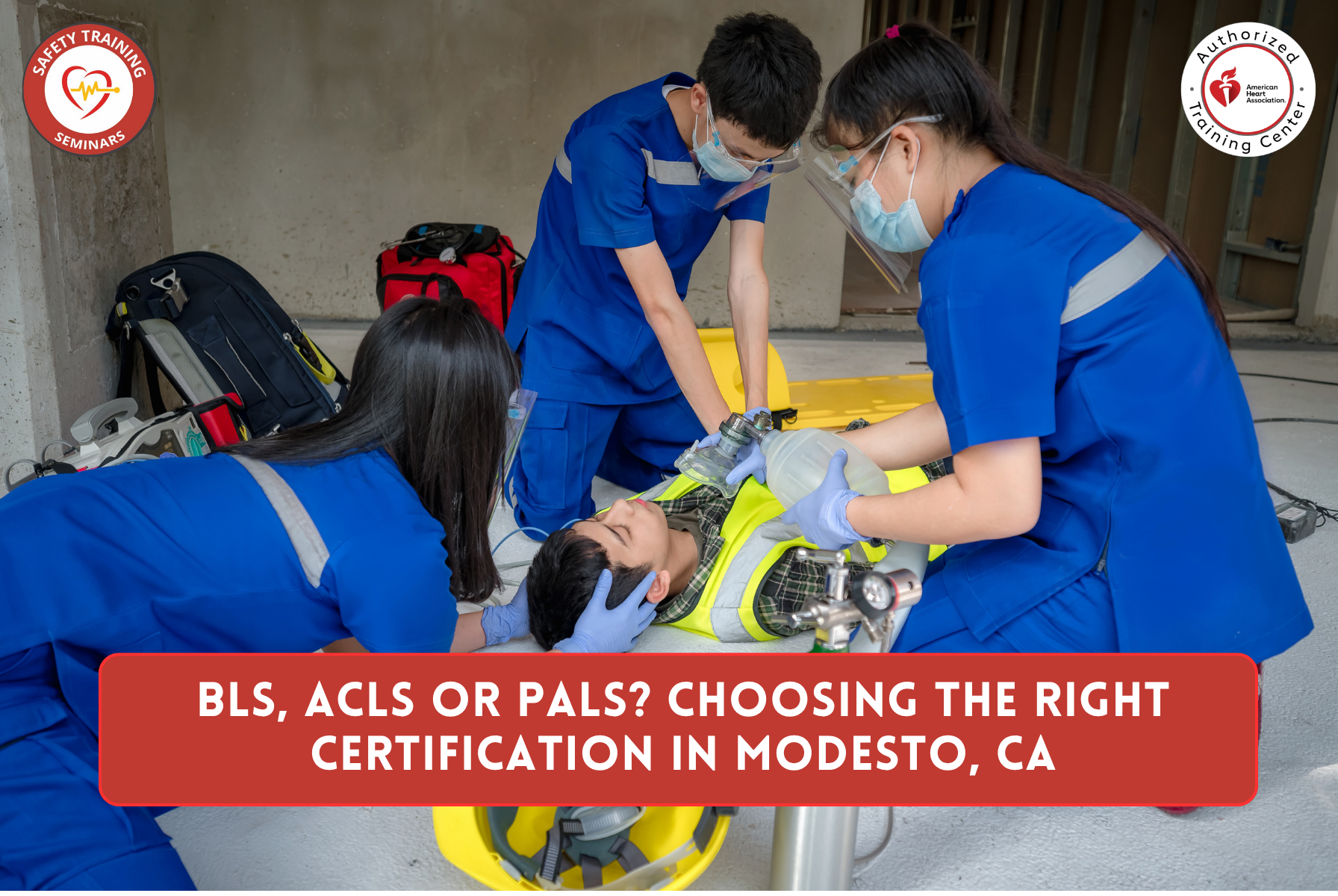
- Ventilation Devices: BLS students learn to use bag-valve-mask (BVM) respirators and pocket masks rather than relying solely on mouth-to-mouth techniques.
- Pulse Checks: Clinical providers learn to perform rapid carotid and brachial pulse checks within a 10-second window before initiating compressions.
- Multi-Rescuer Coordination: Scenarios involve two or more rescuers alternating compressions, managing airways, and integrating AED prompt commands without interrupting chest compressions.
- Opioid Resuscitation: Specific protocols for managing known or suspected opioid overdoses using naloxone alongside CPR.
Understanding these distinctions prevents students from accidentally enrolling in a layperson course that a supervisor or school administrator will reject.
What to Expect During the Course and Skills Evaluation
A standard BLS course balances theoretical knowledge with physical skills practice. Modern curricula focus heavily on high-quality chest compressions, measuring depth, rate, chest recoil, and minimizing interruptions.
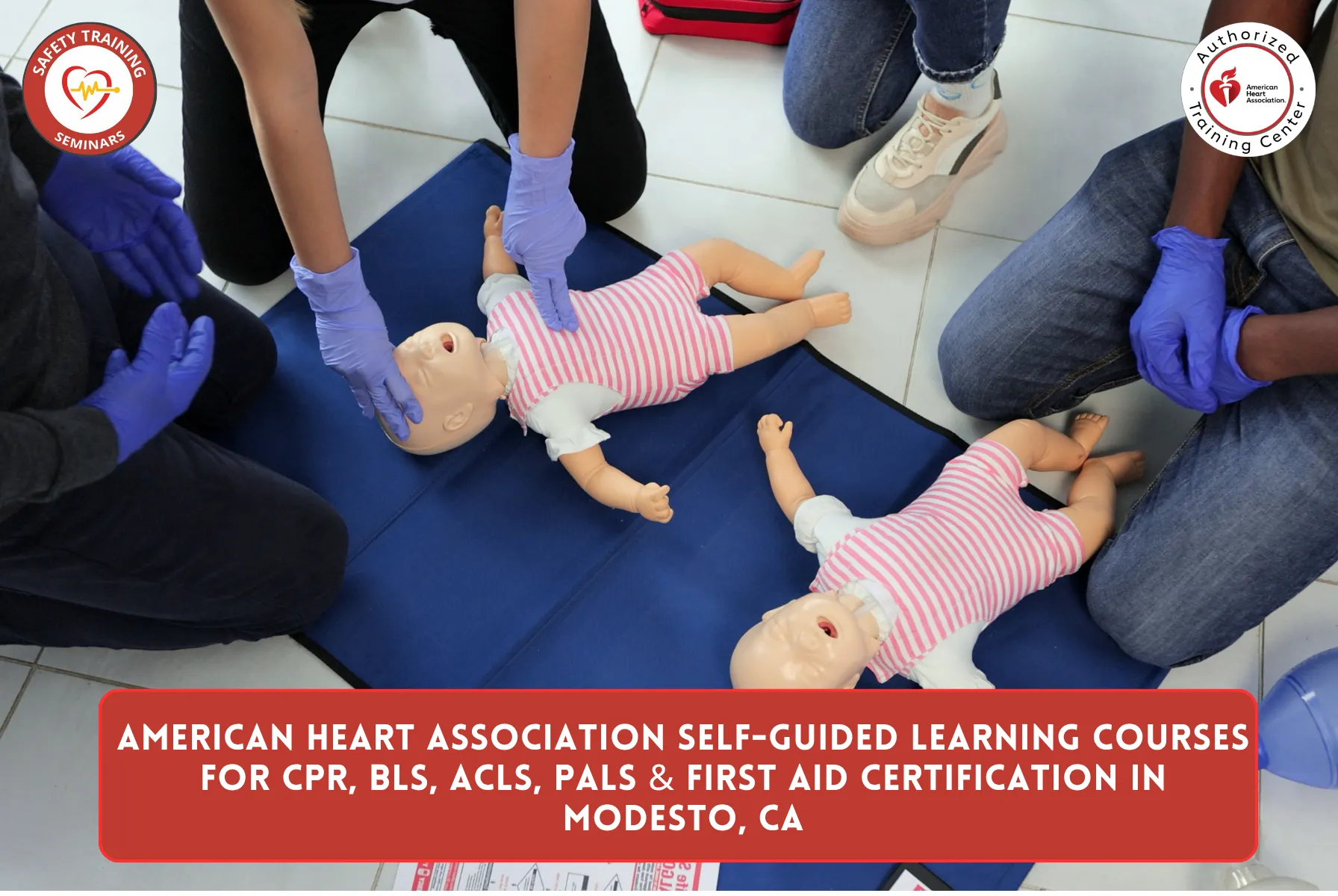
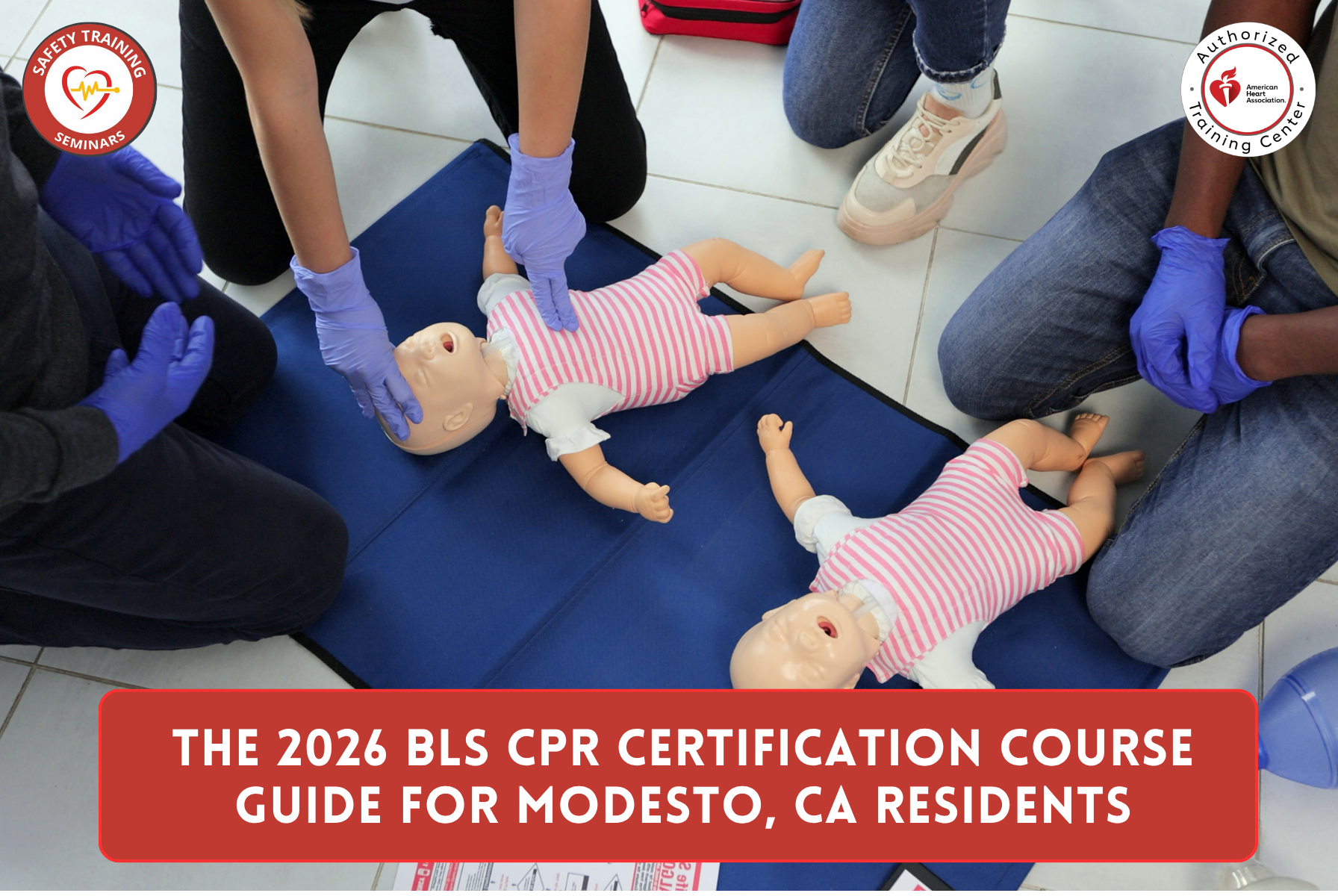
During the session, participants practice on feedback manikins that measure compression depth (2 to 2.4 inches for adults) and rate (100 to 120 compressions per minute). Expect to complete individual skill stations testing adult CPR, infant CPR, AED placement, and relief of foreign-body airway obstructions.
The course finishes with two assessments:
- Hands-On Skills Testing: Demonstrating single-rescuer adult CPR, two-rescuer team CPR with BVM ventilation, and infant CPR/choking relief in front of an instructor.
- Written Knowledge Exam: A multiple-choice test evaluating your understanding of cardiac arrest algorithms, shockable rhythms, and pediatric ventilation rates.
Upon passing both parts, students receive an eCard certification, typically valid for two years.
Comparing Course Delivery Options: In-Person vs. Blended Learning
Busy healthcare schedules make flexible learning options helpful. Today, students in the Central Valley generally choose between two primary training formats:
- Traditional Classroom Training: Led entirely in-person by an instructor, combining lecture, video modules, and group skills practice in a single sitting. This setup works well for students who prefer real-time feedback and peer interaction throughout the entire session.
- Blended Learning (HeartCode BLS format): Students complete the adaptive online cognitive portion at their own pace on a computer or tablet. After passing the online exam, they attend a brief in-person skills session to practice and demonstrate physical proficiency on manikins.
Both options yield the exact same BLS eCard credential upon completion. However, employers require that the skills verification phase occurs in person using physical equipment. Purely online courses without hands-on testing are rarely accepted in medical environments.
Healthcare Workforce and Training Needs in Stanislaus County
Modesto serves as a central medical hub for Stanislaus County, surrounded by agricultural and suburban communities like Ceres, CA and Riverbank, CA. Healthcare facilities across the region maintain strict compliance standards for clinical staff to promote consistent patient care across departments.
Nursing students attending nearby programs or clinical rotations at regional facilities often need to present a current BLS card before entering clinical sites. Similarly, traveling nurses and per diem healthcare staff working across hospitals in Oakdale, CA or Patterson, CA need access to renewal classes so their credentials do not lapse between assignments.
For local professionals, securing a class locally minimizes travel time along Highway 99 or Maze Boulevard, making it easier to complete required training between shifts. Checking Modesto CPR and BLS certification classes allows area clinicians to align their schedule with local course availability.
Completing Your BLS Training at Safety Training Seminars in Modesto
For medical professionals and students seeking local instruction, Safety Training Seminars operates a dedicated training center in Central Modesto. The facility provides regular BLS sessions designed to accommodate morning, afternoon, and weekend schedules for working clinicians.
Located at Safety Training Seminars Modesto CPR Training Center Address: 706 13th Street, Suite A, Modesto, CA 95354, the center sits within easy reach for residents in Modesto as well as neighboring towns such as Hughson, CA and Newman, CA.
Participants at this facility work with modern feedback manikins and practice equipment to fulfill all hands-on requirements in a structured setting. Whether you are taking your initial certification or renewing an existing card, reviewing Ceres BLS training options or exploring nearby schedules helps you select the right date and time. Selecting a local facility helps keep your certification compliant with hospital boards and educational institutions across California.
Frequently Asked Questions
How long is a BLS CPR certification valid? A standard BLS CPR certification remains valid for two years from the end of the month in which the course was completed. To maintain seamless employment authorization, healthcare workers should register for a renewal course roughly 30 days before their card expires.
Is an online-only BLS card accepted by Modesto healthcare employers? No. Hospitals, clinics, and academic institutions in Modesto and Stanislaus County require an in-person skills evaluation. While online cognitive coursework is permitted through blended learning, you must physically demonstrate chest compressions and ventilation skills on manikins in front of an instructor.
Can healthcare workers from Oakdale or Hughson take classes at the Modesto center? Yes. Healthcare providers and students commuting from nearby cities like Oakdale, CA or Hughson, CA frequently attend courses in Modesto. Professionals from outlying areas can explore Oakdale healthcare provider courses or review Hughson area CPR classes to find convenient nearby options.
What should I bring to my BLS CPR class in Modesto? Bring a valid photo ID (such as a driver’s license or work badge) and, if taking a blended learning course, your online completion certificate. Wear comfortable clothing that permits kneeling on the floor, as hands-on compressions require physical movement during manikin practice.
What happens if my current BLS card has already expired? If your card has expired, you will need to complete a full BLS course rather than a brief renewal module. Employers generally do not permit clinical staff to perform patient care duties with an expired credential, so scheduling an open session promptly is recommended.
Next Steps for Modesto Healthcare Professionals
Maintaining a current BLS CPR credential is an ongoing requirement for healthcare providers, clinical students, and medical support staff throughout Stanislaus County. Choosing the correct course format aligns your training with employer expectations while protecting your schedule.
When preparing for upcoming clinical rotations or employer credentialing deadlines, reviewing course formats and scheduling options early prevents last-minute compliance issues. Safety Training Seminars offers flexible scheduling options in Central Modesto to assist local professionals in staying certified. To review open class times, verify course requirements, or reserve a seat, explore the available dates on the local Modesto training page today.